
Strategic S&OP Planning for Long-Term Growth
Most supply chain planning focuses on short-term execution. ChainSequence consultants go beyond that — applying Sales and Operations Planning (S&OP) and Integrated Business Planning (IBP), supported by data-driven analytics and forecasting, to give your business a clearer long-term view.
The result is an evidence-based program that keeps every business unit aligned on the strategic horizon, not just the next quarter.
When to Bring in S&OP Consultants
Every S&OP engagement starts somewhere different. Most companies we work with fall into one of three scenarios — each with its own challenges, timelines, and starting points.
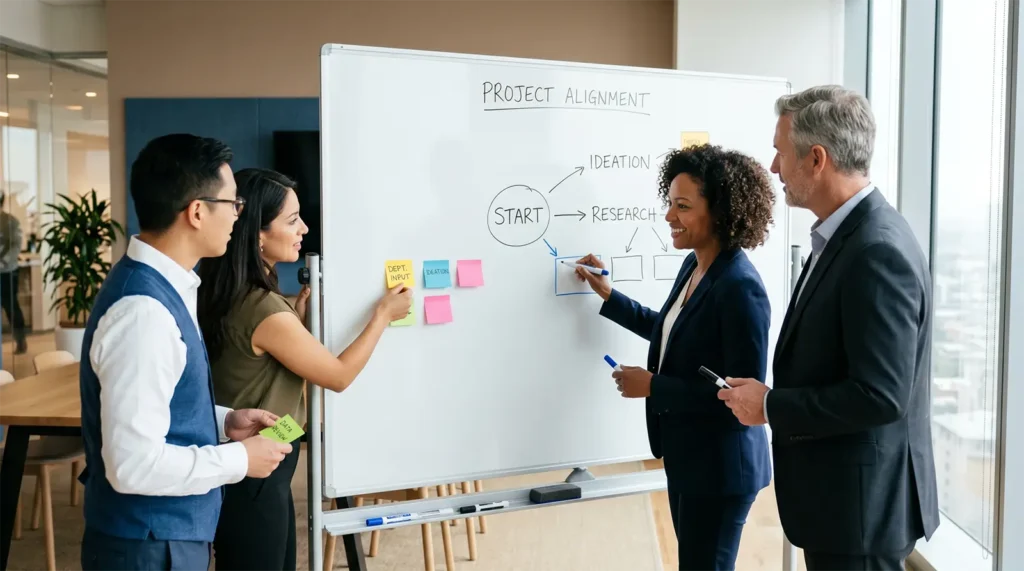
Companies without S&OP
You know S&OP could transform how your business plans — but you don’t have a process in place yet, and you’re not sure where to start.
Every successful S&OP program shares a common foundation:
- A defined cadence
- Clear organizational ownership
- Agreed-upon data inputs
- Structured decision points
What changes between companies is how these elements fit your specific business. ChainSequence consultants adapt our proven five-step model to your organization — working alongside your team to define ownership, set cadence, identify data sources, and clarify the decisions each step drives. The result is an S&OP process built around how your business actually operates, not a textbook framework forced onto an unwilling organization.
Companies With a Poorly Performing S&OP Process
You have an S&OP process — but it’s not driving the long-term alignment, financial performance, or strategic value it should.
Every company’s S&OP challenges are different, but the symptoms tend to look similar: forecasts that don’t match reality, executive meetings that miss the strategic horizon, and operating plans that drift from the financial plan within weeks of approval.
ChainSequence consultants start with a structured assessment to identify root causes — not just visible symptoms. Strong S&OP programs depend on three things working together:
- Full engagement from every impacted business unit
- The right tools to support a defined monthly cadence
- Active executive participation backed by real decision-making information
Often, a struggling S&OP process isn’t actually an S&OP problem — weak underlying planning fundamentals can quietly sabotage even a well-designed program. Our goal is a roadmap of incremental improvements you can implement without halting your existing process.

Companies That Need S&OP Training
You’re considering an S&OP deployment — and you want leadership and operations teams to share a common understanding of the fundamentals before committing.
Before launching a full S&OP initiative, many organizations benefit from foundational training — building shared language, setting realistic expectations, and aligning stakeholders on what an effective S&OP process looks like in practice.
ChainSequence S&OP training is led by consultants with decades of hands-on implementation experience across industries and geographies. Our facilitators learn your specific business, mission, and goals, then deliver training rooted in your context — giving your team the framework, examples, and best practices to evaluate readiness, ask the right questions, and build discipline around S&OP principles.
The Five-Step S&OP Process
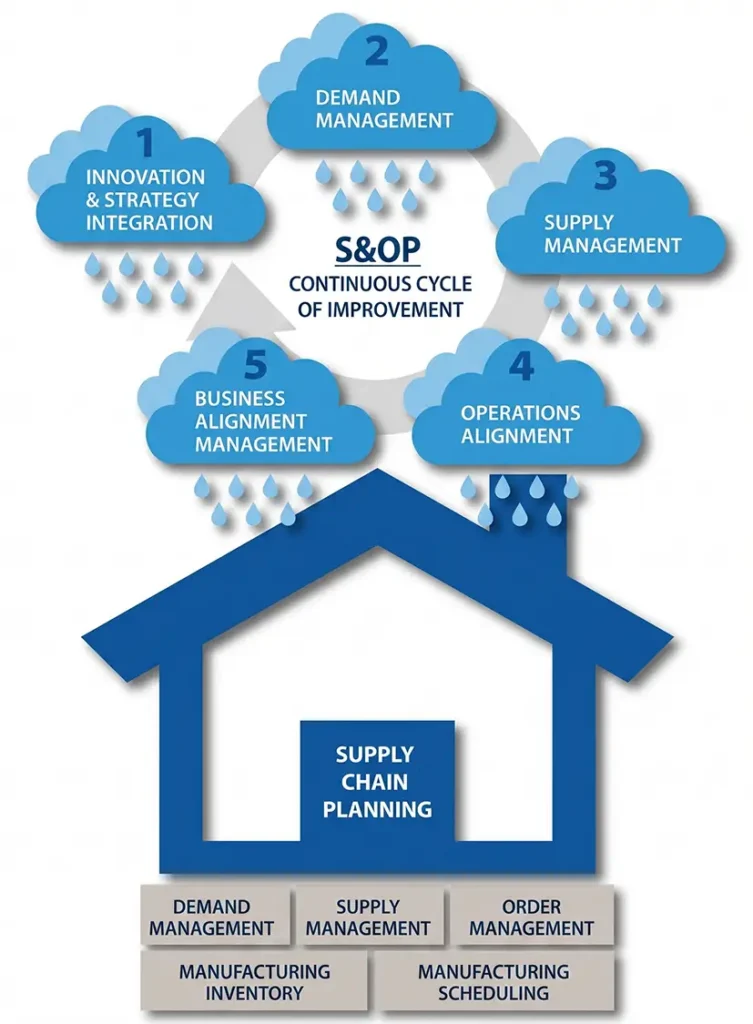
An effective S&OP process moves through five connected steps each cycle — from product strategy through executive alignment — producing a single coordinated operating plan the business can execute against.
1. Innovation & Strategy
Review product portfolio performance and roadmap updates with input from Product Marketing, Product Management, and Marketing. Examine demand shaping opportunities and KPIs to identify improvements.
Step Result: Product roadmap updates, portfolio adjustments, and SKU rationalization actions to improve demand and supply shaping.
2. Demand Management
Develop a single, unconstrained forecast view using AI-generated demand plans, market intelligence, and customer trends. Pre-meetings by product line or sales channel surface the risks and opportunities that shape the consensus demand plan.
Step Result: An 18+ month unconstrained consensus demand plan.
3. Supply Management
Evaluate the demand plan against target inventory levels and risk assumptions, then generate a supply response. Address supply constraints, procurement, and logistics issues. Balance supply with demand to produce a preliminary constrained demand plan, and review long-term capacity for capital planning.
Step Result: Supply chain gap-closing scenarios and a preliminary constrained demand plan.
4. Operations Alignment
Compare the proposed operating plan against financial plans. Focus on revenue gaps, production constraints, and excess inventory. Develop scenario trade-offs and recommend an operating plan for executive approval.
Step Result: A proposed operating plan with demand and gap-closing scenario actions.
5. Business Alignment Meeting
A focused executive review to discuss and approve a single operating plan. If needed, approve actions to close gaps to the financial plan or budget. Review business performance and assign actions for the next cycle.
Step Result: A final constrained operating plan with actions to be taken in subsequent S&OP cycles.
